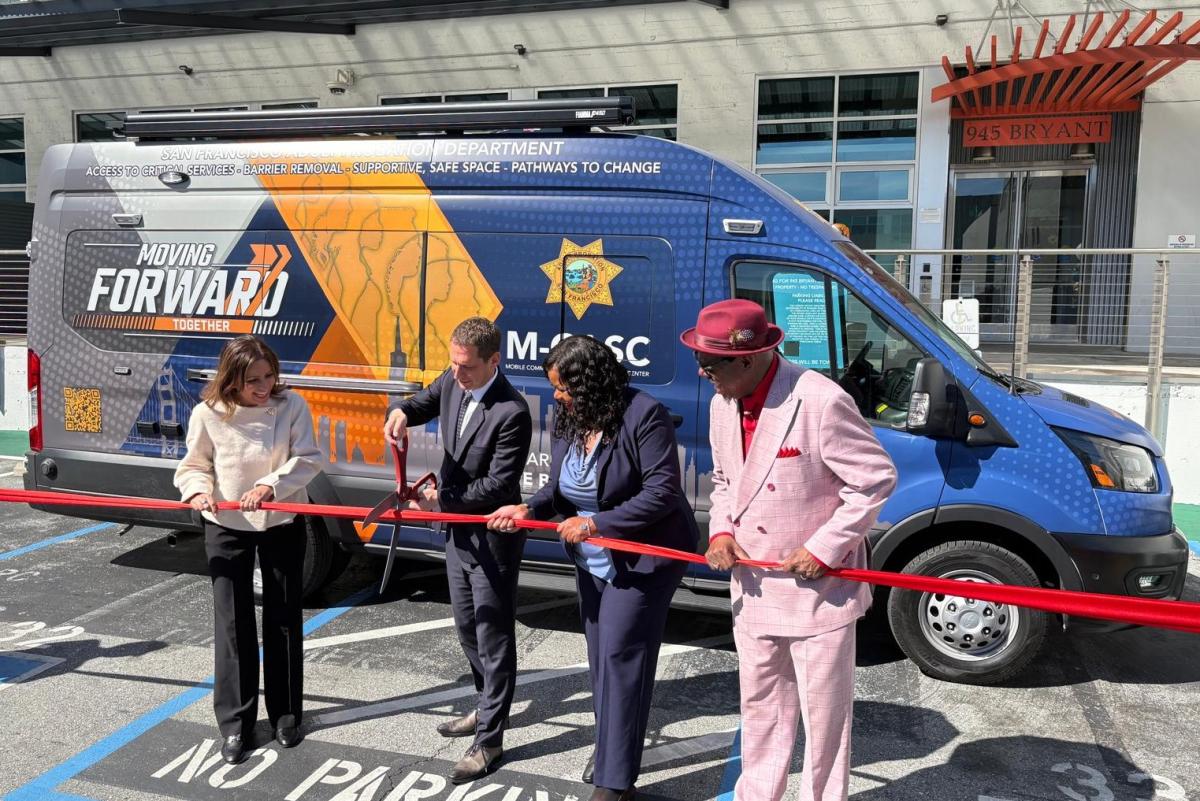
San Francisco Probation Rolls Out Van for Unhoused in ‘High Poverty,’ ‘High Crime’ Areas
From Mission Local
SAN FRANCISCO COUNTY, Calif. – February 28, 2026 – The San Francisco Adult Probation Department this week launched a mobile unit that will travel to “high-poverty and high-crime communities” across the city to reach people on probation in the streets.
Cristel Tullock, chief of the adult probation department, said the van will go to neighborhoods like the Mission, Tenderloin, and Bayview-Hunters Point, where probation staff will set up a table with chairs out front. Officers will circulate on bikes to tell those nearby that the van is in the area.
The unit aims to serve the roughly 15 percent of those on probation in the city who are experiencing housing instability, based on the most recent data shared by the probation department. The program will offer a variety of services, like connecting people to housing, job programs, therapy, education programs, and behavioral health services, among other resources.
…
The program was announced Thursday at noon. Richard Beal, director of recovery services at the Tenderloin Housing Clinic, stood in front of a small crowd at the Adult Probation Department and described how, back in 1995, an outreach van run by the Mobile Assistance Patrol picked him up and took him to St. Anthony’s treatment program.
“The whole trajectory of my life changed because of that van ride,” he said. Beal had four felony warrants at the time, he said, but when he got into treatment and completed it, his charges were reduced to misdemeanors. They were eventually dismissed, and he only had to complete his probation.
…
The van is equipped with outlets to charge devices, including ankle monitors, which can create problems for people on probation when they run out of battery. There will also be a laptop available for use on-site and phones people can borrow. The initiative was funded through a $507,470 grant from California’s Board of State and Community Corrections, part of $20 million in disbursements to 25 county probation departments.
Although the van services are primarily aimed at people who have been impacted by the criminal justice system, Tullock said that if other individuals — like homeless people who are not on probation — come to the van, staff can provide hygiene kits and refer them to other partners, like the Human Services Agency and the Department of Public Health.
…
Mayor Daniel Lurie at the Thursday presser said that improving public safety, a major focus of his administration, means ensuring people released from jail and prison have the tools to succeed.
“When people on probation have that support, it limits the possibility of repeat offenses, which makes our city safer,” he said.
…
Read the full article here.