Creating Education Path for Incarcerated Youth: Partnership by Community College, San Mateo County Probation Department and Office of Education
SAN MATEO COUNTY, Calif. – April 4, 2026 – A program through the San Mateo County Community College District is leading students affected by the juvenile justice system into higher education, an over-decade model for interrupting the school-to-prison pipeline throughout the state.
A presentation on Project Change was given to the community college district’s Board of Trustees March 25, highlighting the impact the juvenile justice program has had for any young person who was arrested, detained or referred to probation before the age of 25.
To Tiffany Cauyong, the juvenile justice program was pivotal in transforming her time as an incarcerated youth into a passion and majoring in administration of justice.
“Project Change was essential in me bridging that gap between incarceration at such a young age and college,” Cauyong said to trustees. “At a young age, I was not aware, and it was a lot to navigate that whole process without any type of support.”
…
In May 2025, a graduation inside the Youth Services Center for Hillcrest School celebrated three students who completed associate degrees for transfer while inside — two are going to Sonoma State University and one at San Francisco State University.
Five other graduates celebrated finishing high school while in the facility — all of which are matriculating in Skyline College.
….
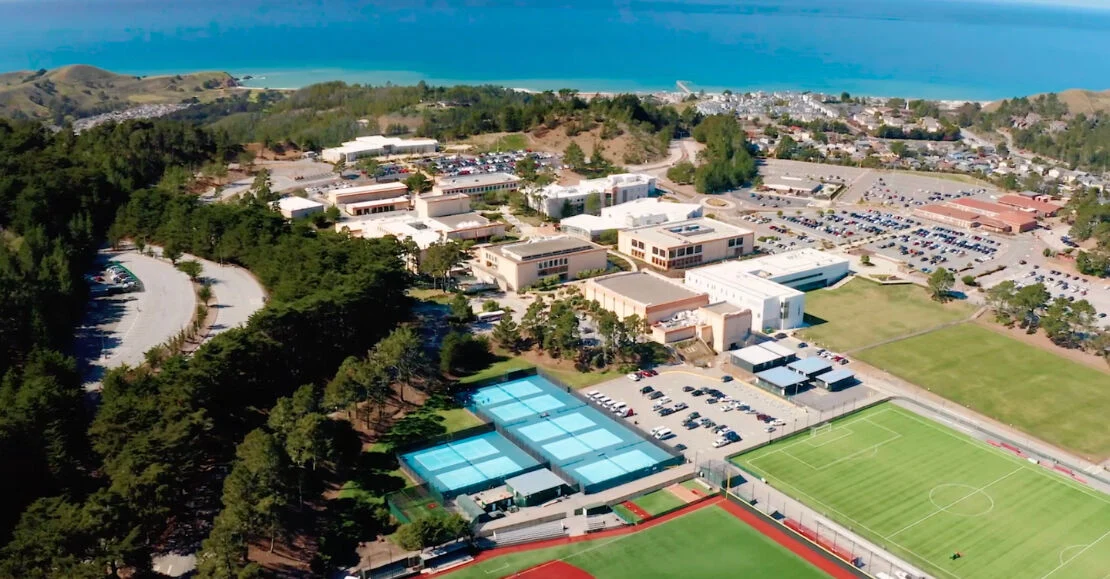
Project Change was first established at the College of San Mateo in 2013, and the success of the program led to the program’s expansion at each of the three district’s campuses. The program is sustained largely by grants funded by the state’s Rising Scholars Juvenile Justice Program. The College of San Mateo, Skyline College and Cañada College all participate in coordinating and offering classes at Hillcrest, the court school within the county’s Youth Services Center, or juvenile hall.
At Hillcrest, the school within the Youth Services Center, students are offered college level transferable courses, tutoring, workshops, matriculation services and dedicated counselors at each of the colleges that go into the facility.
…
The juvenile detention facility has a capacity for 180 youth, but the average daily populations are usually far lower, averaging at 64 a day in 2018. The goal of many is to make the facility unnecessary, McVean said.
“If we have the right alternatives in place, I strongly believe that the need for that goes away,” McVean said.
Chief Probation Officer John Keene has been a critical supporter of Project Change, McVean said, and there are many hurdles to navigate when integrating the educational and justice systems.
“These two systems were never meant to go together,” McVean said, and Keene “removes barriers every single semester.”
Looking ahead, the district and its partners are looking to expand the program’s reach and look into “less restrictive programs” which would allow students to be furloughed from the juvenile hall facility to attend a class in person on campus, McVean said.
Another area of interest is establishing student housing dedicated for students within the juvenile justice programs, similar to what is provided at Sonoma State University.
…
Following the presentation, trustees also approved two memorandums of understanding with the San Mateo County Office of Education and the San Mateo County Probation Department for continuing services.
Read the full article here.
##
San Mateo County Probation The mission of the San Mateo County Probation Department is to enhance community safety, reduce crime, and assist the victims of crime through offender accountability and rehabilitation. The vision of the San Mateo County Probation Department is to be a proactive and innovative agency which facilitates positive changes in offenders’ behaviors that reduce recidivism and foster a law-abiding lifestyle.