First-of-its-Kind Program in Santa Clara County Lets Incarcerated Youth Become Health Educators – and it’s Changing Lives
From Santa Clara County, by Eric Kurhi.
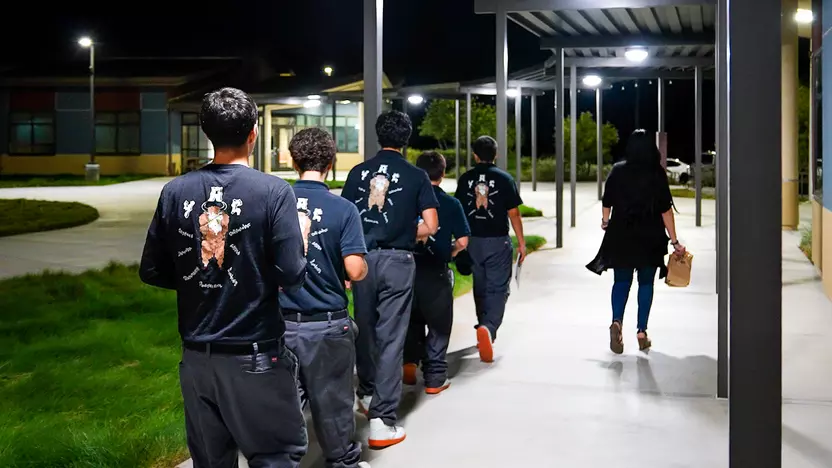
SANTA CLARA COUNTY, Calif. – November 10, 2026 – It’s a notion that seems almost self-evident in its simplicity: If you want to engage a skeptical teen audience that will scrutinize your message, choose the messenger wisely.
In this case, the audience is incarcerated youth at the County juvenile detention facilities. And the best messenger? That would be incarcerated youth at the County juvenile detention facilities.
“Someone who looks like you, who sounds like you, who may have lived experiences similar to yours – you’re probably more likely to hear them,” said Dr. Shelley Aggarwal, medical director for Juvenile Custody Health Services….
And thus was born the Peer Health Education Program, created by Santa Clara Valley Healthcare’s Juvenile Custody Health Services and implemented in partnership with the [Santa Clara] County Probation Department. While the idea may seem simple, it is the first youth-led health education model inside a juvenile detention facility anywhere in the nation, earning a prestigious 2026 Challenge Award from the California State Association of Counties for its innovation and effectiveness.
…“We know peer education works and a trusted messenger – another teen – is more likely to have an impact on decision making,” said Aggarwal. “By empowering youth with health information, we have an opportunity for harm reduction that could impact short- and long-term outcomes.”
So, her team designed a six‑week series where young people would learn – and then teach – essential health topics: general wellness, reproductive health, STI prevention, and substance use. They evaluated comprehension before and after the modules, refining content each cycle.
“The Peer Health Education Program demonstrates the power of connection,” said Interim Probation Chief Alex Villa, adding that the collaboration benefits the youth and staff alike.
“Our youth educators collaborate closely with staff to build their knowledge, develop presentations, strengthen their skills, and support their peers – gaining valuable experience they can carry with them for years,” he said. “While the program certainly promotes positive outcomes, it is the meaningful relationships formed along the way that make it truly impactful.”
The new approach, now several cohorts in since its inception in the fall of 2022, has proven more effective and improved the lesson plans, while fostering growth among the participating peer educators.
That’s because the curriculum isn’t simply delivered to youth – it is built with them. Teens modify wording or examples that feel out‑of‑touch, offering alternatives rooted in their own experiences.
….“That’s exactly why this program works,” Aggarwal said. “Adults might think something is important, but that doesn’t mean it lands for them [youth]. The youth voices tell us how to make the information relevant.”
Susie Rivera, who leads the Youth Advisory Council – a leadership and advocacy group for incarcerated youth – said this co‑creation is transformative and that the impact becomes undeniable once systems stop speaking at them and start collaborating with them.
…Rivera said that for the educators in particular, a mindset shift is readily apparent. Teens who once avoided speaking in front of a group now lead classroom discussions, refine lesson plans, and guide their peers through essential health topics.
One peer educator described a sense of purpose and value: “When I was presenting to the class, I felt like I played a big role… my peers were actually listening to me. They weren’t just dozing off; they were paying attention because I’m just like one of them.”
Another said that, not only did he enjoy delivering the lessons, but had taken them to heart: “It helped me want to stop some bad habits – I want to stop doing drugs because I know my brain is still developing – I’ll take that with me when I get out.”
Some began imagining futures they hadn’t considered before – as counselors, as nurses, as people would could help others. Others described the satisfaction in being able to talk to loved ones about the program.
“It felt good to tell my family about it, telling them what I’ve been doing,” said a peer educator. “Like I’m not just wasting my time here – I’m actually doing something important.”
Rivera said she personally has witnessed previously shy speakers “who wouldn’t say two words at school” become leaders….
While Santa Clara County has published its findings and developed a replicable model for other jurisdictions to follow, Aggarwal emphasized that success depends on collaboration spanning medical teams, probation officers, educators, and community partners.
“You can have a vision, but unless you have partners who help implement it, it’s not going to be successful,” she said.
Other counties have already expressed interest – and Aggarwal, Rivera and the youth participants all hope the idea spreads….